Electrical problems rarely begin with a complete power failure. More often, the first signs are subtle: a light that flickers occasionally, a power point that feels unusually warm, a circuit breaker that trips repeatedly, or a burning smell near an electrical fitting. These warning signs can be easy to overlook, particularly when everything else in the house appears to be working normally.
For homeowners, recognising these early symptoms can help prevent avoidable disruptions, reduce the risk of electrical hazards and identify repairs before they become more complicated. Professional electrical maintenance is also useful when renovating, purchasing an older property, adding new appliances or preparing a home for changing electrical demands.
Understanding when to arrange electrical maintenance Broadmeadows services helps homeowners make informed decisions about the safety and reliability of their electrical systems. Rather than waiting for a fault to interrupt daily life, a planned approach allows potential issues to be assessed and addressed by a qualified professional.
Light Electrical understands the importance of dependable electrical systems in everyday homes. This guide explains when maintenance may be necessary, which warning signs deserve attention, what a professional inspection can involve and how homeowners can think about the electrical maintenance cost in Broadmeadows without paying for unnecessary work.
Why Electrical Maintenance Matters for Broadmeadows Homes
A home’s electrical system supports almost every part of modern living. Lighting, refrigeration, heating and cooling, cooking equipment, entertainment systems, computers and charging devices all rely on electrical infrastructure that must operate safely.
Over time, electrical components can deteriorate, connections may loosen, and household electricity demand can increase. A switchboard that has served a household for many years, for example, may need to be assessed when the property gains additional appliances or undergoes renovations.
Properties in Broadmeadows vary in age, layout and electrical requirements. Some homes may have older wiring or outdated fittings, while others may have newer installations that still require attention after changes to their electrical load.
Routine maintenance helps identify concerns such as:
Damaged switches, sockets and electrical fittings.
Loose or deteriorating electrical connections.
Repeated circuit breaker trips or unexplained power interruptions.
Inadequate protection against electric shock.
Electrical equipment that is damaged, overheating or no longer suitable for its intended use.
Electrical installations that need assessment following renovations or the addition of high-demand appliances.
Not every home needs the same maintenance schedule. The appropriate approach depends on the property’s age, the condition of its electrical installations, previous repairs and any signs of deterioration.
The goal of Electrical Maintenance is not to replace working equipment unnecessarily. It is to identify genuine concerns, understand their causes and determine what work is reasonably required to maintain safety and reliability.
7 Signs You Should Arrange Professional Electrical Maintenance
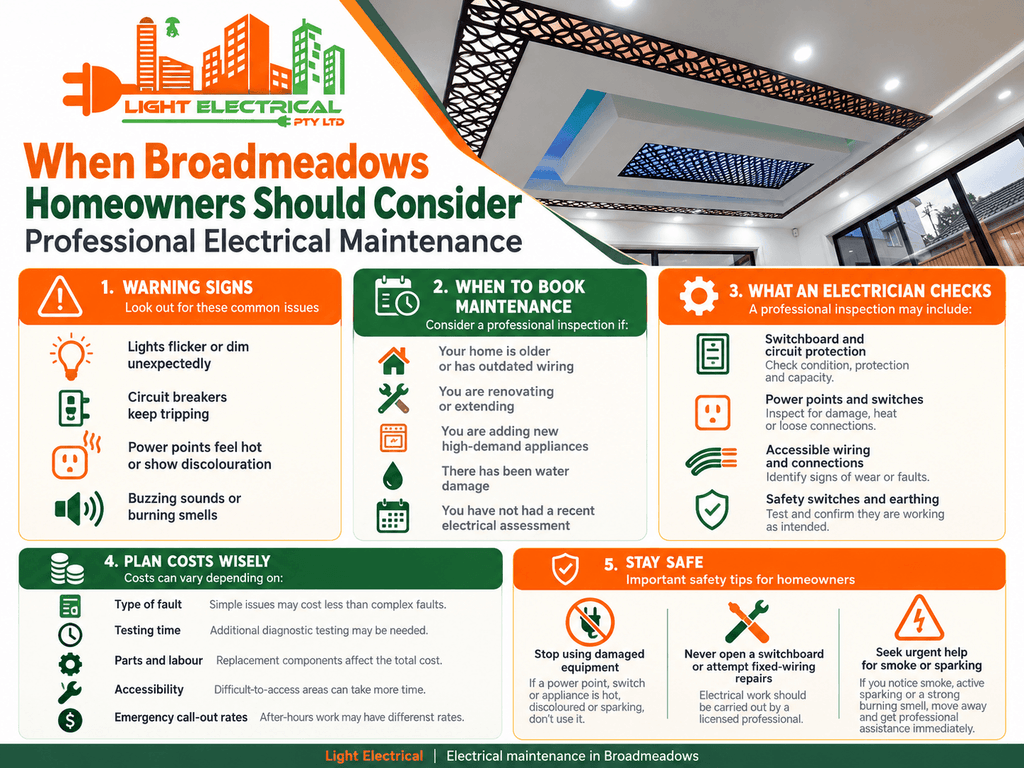
Knowing what to look for can help homeowners decide when to contact an electrician. Some symptoms require urgent attention, while others indicate that an assessment should be arranged before the problem develops further.
1. Circuit Breakers Keep Tripping
Circuit breakers are designed to interrupt electrical supply when a circuit experiences certain abnormal conditions, including an overload or fault.
An occasional trip may follow the simultaneous use of several high-demand appliances. However, repeated tripping can indicate an overloaded circuit, a faulty appliance, damaged wiring or another electrical issue that needs investigation.
For example, if the kitchen circuit trips whenever the kettle and another high-powered appliance operate together, a qualified electrician can determine whether the cause is excessive demand, a faulty appliance or an installation problem.
Do not repeatedly reset a breaker without identifying why it has tripped. If the problem persists, leave the affected circuit off if it is safe to do so and arrange a professional assessment.
2. Lights Flicker or Dim Unexpectedly
A flickering light may result from a loose lamp, a failing light fitting or another relatively simple issue. However, flickering that affects several lights, occurs when appliances start or happens alongside other electrical symptoms may indicate a more significant fault.
Pay attention to when the problem occurs.
One lamp flickers while other lights work normally.
Several lights dim when a large appliance starts.
Lights flicker alongside unusual sounds, heat or a burning smell.
The problem occurs repeatedly despite replacing a suitable bulb.
These patterns can help an electrician narrow down the possible causes. Avoid removing fittings or opening electrical connections to investigate the issue yourself.
3. Power Points Feel Hot or Show Discolouration
A power point or switch that feels unusually warm, has visible scorch marks or produces a burning smell should never be treated as normal.
Possible causes include a poor connection, damaged components, excessive loading or a faulty appliance. Continued use can increase the risk of electrical damage and fire.
Stop using the affected outlet. If it is safe, switch off the relevant circuit without touching damaged equipment. If there is smoke, active sparking or fire, move away and contact emergency services.
Arrange an urgent assessment by a licensed electrician. Do not attempt to repair the outlet yourself.
4. You Notice Buzzing, Crackling or Burning Smells
Electrical equipment should not produce persistent crackling, unexplained buzzing or a smell resembling burning plastic.
These symptoms may indicate arcing, overheating or deteriorating components. Because the source may be concealed inside a wall, fitting or switchboard, it should not be investigated by dismantling electrical equipment.
If you notice these warning signs, stop using the affected equipment and seek urgent professional assistance. If smoke or fire is present, evacuate the affected area and call emergency services.
5. Your Home Has an Older Switchboard
An older switchboard is not automatically unsafe, but its age and protective equipment deserve attention when its condition or suitability is uncertain.
An electrician can assess whether the switchboard has appropriate circuit protection, whether any components show signs of damage and whether the installation remains suitable for the household’s electrical demand.
Safety switches, also known as residual current devices (RCDs), provide important protection by rapidly disconnecting electricity when they detect certain current leakage conditions. They are different from circuit breakers, which primarily protect wiring against overcurrent conditions.
If you are unsure whether your home has suitable protection, a professional assessment can establish what is installed and whether improvements are needed.
6. You Are Adding Major Appliances or Renovating
Electrical maintenance is particularly worth considering before significant changes to a property.
Installing an electric cooktop, adding heating or cooling equipment, creating a home office or preparing for an electric vehicle charger may change how electricity is distributed and used.
For example, a homeowner renovating a kitchen may plan to install an induction cooktop, dishwasher and additional power points. Before work begins, an electrician can assess the existing circuits, switchboard capacity and any installation changes required.
This helps identify constraints early, when they are generally easier to plan for than after renovation work is underway.
7. You Have Not Had the Electrical System Assessed for Years
There is no single maintenance interval that suits every residential property. However, a home that has undergone years of use without a meaningful electrical assessment may benefit from one, particularly if it is older or has experienced unexplained faults.
An assessment may be especially useful when buying an established home, after water damage, following significant renovations or when the household’s electricity requirements have changed.
A lack of visible problems does not prove that every concealed electrical component is in good condition. Equally, it does not mean the installation requires extensive replacement. Inspection findings should guide the next steps.
Electrical Safety: When Is Maintenance Urgent?
Not all electrical concerns can wait for a convenient appointment. Understanding the difference between routine maintenance and an urgent fault helps homeowners respond appropriately.
Immediate danger
Smoke, fire, active sparking, a strong burning smell or a suspected electrical shock hazard.
Move away from the danger, do not touch affected equipment and call emergency services if there is fire or immediate danger.
Urgent electrical fault
Repeated breaker trips, hot or discoloured outlets, persistent crackling or a switchboard that shows signs of overheating.
Stop using the affected equipment or circuit if safe, and arrange prompt professional assessment.
Planned maintenance
An older installation with no recent assessment, planned renovations, additional appliances or a home purchase.
Arrange an inspection at a suitable time before making significant changes or when concerns arise.
These categories are practical guidance rather than a substitute for an electrician’s assessment. If you cannot determine whether a fault is dangerous, treat it cautiously and seek professional advice.
Electrical Maintenance: What Does a Professional Inspection Involve?
A professional inspection should be guided by the home’s condition, the reported symptoms and the work being requested. It should not automatically lead to a long list of replacements.
A qualified electrician may assess several parts of the installation, depending on the scope of the job.
Switchboard and Circuit Protection
The electrician may examine the switchboard for visible damage, overheating, unsuitable components and concerns with circuit protection. They can also assess the presence and condition of relevant safety switches and determine whether additional protection is required.
Where necessary, electrical testing can help establish whether protective devices operate correctly. The appropriate tests depend on the installation and the work being undertaken.
Power Points, Switches and Light Fittings
Visible electrical fittings may be checked for cracking, loose mounting, discolouration, heat damage or other signs of deterioration.
If a fitting has been reported as faulty, the electrician may investigate the underlying cause rather than simply replacing the visible component.
For instance, a power point that repeatedly becomes warm may require more than a replacement faceplate. The cause could involve the connected appliance, the connection or the circuit itself.
Wiring and Electrical Connections
An electrician can assess accessible wiring and investigate suspected problems with connections or concealed electrical installations where appropriate.
Not every inspection requires opening walls or replacing wiring. The extent of investigation depends on the symptoms, accessibility and evidence of a fault.
If testing indicates a problem that cannot be fully assessed during the initial visit, the electrician should explain the findings and recommend suitable next steps.
Earthing and Safety Switches
Earthing and protective devices play different but complementary roles in electrical safety. Earthing provides a path for fault current under appropriate conditions, while safety switches are designed to disconnect supply when they detect certain leakage currents.
A professional can assess relevant parts of these protective arrangements and determine whether corrective work is needed.
Homeowners should not remove switchboard covers, test internal electrical connections or carry out electrical installation work themselves.
Electrical Load and Future Requirements
A maintenance visit can also help identify whether the installation is suitable for planned changes.
This may include additional air conditioning, an electric cooktop, a home workshop or an EV charging installation. The electrician can advise whether the existing circuits and switchboard are suitable or whether further assessment or upgrades are required.
The benefit is practical: identifying electrical constraints before buying equipment or finalising renovation plans can reduce unexpected costs and delays.
When to Contact a Licensed Electrician in Broadmeadows VIC
Choosing the right professional matters because electrical work must be performed by people with the appropriate licensing and qualifications for the work involved.
Verify licensing: Check the electrician’s licence through Energy Safe Victoria or the relevant Victorian authority. Ensure the licence covers the proposed work.
Explain the symptoms clearly: Describe when the fault occurs, which appliances are involved and whether the issue affects one circuit or the entire home.
Ask about the scope: Find out whether the quote includes inspection, testing, labour, materials and any required certification.
Request an explanation of findings: A professional should be able to explain what has been identified, why it matters and which repairs are necessary.
Understand the documentation: Ask what test results, certificates or other records will be provided where applicable.
A residential electrician Broadmeadows homeowners engage should also understand the practical needs of an occupied property. That includes explaining any planned power interruption, identifying circuits that need to remain off and communicating clearly about access requirements.
For work involving electrical installation, repair or alterations, the appropriate licensing and compliance obligations should be confirmed before work begins.
Electrical Services: Maintenance for Different Types of Homes
Electrical requirements differ between properties, even when they are located in the same suburb. Maintenance decisions should reflect the actual installation rather than assumptions based on a home’s age or appearance.
Older Houses
Older properties may have experienced multiple renovations, changes to wiring or the addition of electrical appliances over time.
An inspection can help identify outdated components, signs of deterioration, inadequate circuit protection or inconsistencies between the existing installation and its current use.
However, an older home does not automatically require complete rewiring. Recommendations should be based on the condition of the installation, the applicable requirements and the findings of appropriate inspection and testing.
Modern Homes
Newer homes can still experience electrical faults. Damaged appliances, overloaded circuits, poor-quality equipment or installation problems may occur regardless of a property’s age.
Maintenance may be appropriate when a problem appears, when equipment is added or when the household’s electricity requirements change.
A relatively new home should not be assumed to be fault-free simply because its electrical installation has not been in use for long.
Renovated Properties
Renovations can create new electrical demands and may involve changes to circuits, fittings or switchboards.
Before work begins, discuss electrical requirements with the relevant trades and arrange an assessment where necessary. After the work is completed, ensure any required testing, compliance documentation and electrical safety checks are addressed.
Rental and Investment Properties
Landlords should ensure that applicable electrical safety and inspection obligations are met. In Victoria, rental providers have specific duties under residential tenancy regulations, including requirements relating to electrical safety checks.
The precise obligations depend on the property and the applicable rules. Landlords should check current requirements with Consumer Affairs Victoria rather than relying solely on a general maintenance schedule.
For owner-occupiers, the same principle applies: keep records of inspections and repairs, and do not confuse general preventative maintenance with any legally required inspection or testing.
Understanding the Electrical Maintenance Cost in Broadmeadows
The electrical maintenance cost in Broadmeadows depends on the nature of the work, the time required to investigate the issue and whether any components need repair or replacement.
There is no single price that accurately covers every home. A straightforward repair and a fault involving concealed wiring or a switchboard are very different jobs.
What Influences the Cost?
Cost factor
Why it matters
Type of fault
A simple fitting issue may require less investigation than repeated circuit trips or an intermittent fault.
Testing requirements
Additional diagnostic testing may be needed to identify the source of a problem.
Accessibility
Difficult-to-access wiring or equipment may increase labour time.
Parts and materials
Replacement switches, protective devices, wiring or other components affect the total.
Urgency
After-hours or emergency attendance may have different rates from scheduled work.
Scope of repairs
A repair involving several circuits or a switchboard may require more work than a single-component replacement.
These factors are more useful than relying on an advertised starting price that may not reflect the work your home actually needs.
How to Budget Without Compromising Safety
Homeowners can take several practical steps to make maintenance costs more predictable.
1. Describe the problem before booking. Explain the symptoms, how frequently they occur and whether any breakers have tripped. Clear information helps the electrician understand what may be involved.
2. Ask whether the initial fee includes testing. A call-out charge does not necessarily include all diagnostic work or repairs. Clarify what is covered before approving the job.
3. Request itemised recommendations. If multiple issues are found, ask which ones require urgent attention and which can be planned for later.
4. Confirm the cost of additional work. If further repairs become necessary, request an explanation and an updated quote where practicable before proceeding.
5. Avoid choosing on price alone. Appropriate licensing, a clear scope, suitable materials and compliance with relevant requirements matter more than an unusually low estimate.
The cheapest initial quote may not be the least expensive outcome if it fails to address the actual cause of the fault.
Should You Repair or Replace an Electrical Component?
The decision depends on its condition, suitability and compliance requirements.
A damaged power point may only need replacement, while a deteriorated connection or an unsuitable circuit may require more extensive work. Similarly, a switchboard assessment may identify one defective component or a broader need for improvement.
Ask the electrician to explain the reason for the recommendation, whether a repair is appropriate and what risks or limitations remain if the work is deferred.
This allows homeowners to make informed decisions rather than approving unnecessary upgrades or postponing important safety work.
How Often Should Homeowners Arrange Electrical Maintenance?
There is no universal inspection interval for every owner-occupied home. The right timing depends on the installation, its condition, how heavily it is used and whether any warning signs have appeared.
A practical approach is to consider an assessment when:
You move into an older property and have limited information about its electrical history.
You notice recurring electrical symptoms, even if the system continues to operate.
You plan renovations or install major electrical appliances.
Water damage, flooding or another event may have affected electrical equipment.
An electrician previously identified defects that require follow-up.
You are responsible for a rental property and need to meet applicable inspection requirements.
For example, a homeowner who has recently purchased a house may not know whether its safety switches have been tested or whether previous renovations included changes to the wiring. An initial assessment can establish the installation’s condition and identify any necessary work.
By contrast, a homeowner with a recently assessed installation and no reported problems may not need the same level of investigation. Follow the electrician’s recommendations and any applicable statutory requirements rather than arranging unnecessary work simply because a particular period has elapsed.
Common Electrical Maintenance Mistakes to Avoid
Even well-maintained homes can develop faults. The following mistakes can make electrical problems harder to identify or increase the risk of injury.
Ignoring Small Warning Signs
A single flickering light may not indicate a major fault, but recurring symptoms deserve attention. Keeping a simple record of when problems occur can help the electrician identify patterns.
Repeatedly Resetting Tripped Breakers
A breaker that trips repeatedly is indicating that something needs investigation. Resetting it again and again does not resolve the underlying cause and may expose the installation to continued risk.
Overloading Power Boards
Connecting multiple high-demand appliances to one power board can exceed its rating or overload the circuit. Follow the manufacturer’s instructions, check equipment ratings and avoid using damaged leads or boards.
Attempting DIY Electrical Repairs
Replacing electrical fittings or modifying fixed wiring may involve regulated electrical work. In Victoria, homeowners should use appropriately licensed professionals for electrical installation work rather than opening switchboards, modifying wiring or attempting repairs beyond what is legally permitted.
Simple precautions, such as switching off an appliance and inspecting an accessible plug for visible damage, are different from working on electrical installations. Never touch exposed conductors or investigate suspected live electrical faults.
Assuming a New Appliance Means an Existing Circuit Is Suitable
A newly purchased appliance may have higher electrical demands than the equipment it replaces. Before installing major appliances, confirm that the existing circuit, connection and protective devices are suitable.
Expert Tips for More Effective Electrical Maintenance
A little preparation can make a professional visit more useful and help homeowners avoid unnecessary disruption.
Keep a record of recurring problems. Note whether the issue occurs at a particular time, when a specific appliance operates or after heavy rain. Do not deliberately recreate a dangerous fault to gather information.
Maintain records of electrical work. Keep relevant invoices, inspection reports, test results and compliance certificates. These records can help future electricians understand previous repairs and identify outstanding issues.
Discuss future plans early. If you intend to install an EV charger, add air conditioning or renovate a kitchen, mention these plans during an electrical assessment. Planning ahead can help coordinate the work and identify capacity requirements.
Ask for priorities, not just a list of defects. If several issues are identified, ask which ones create immediate safety concerns, which require timely repairs and which improvements can be scheduled. Urgent hazards should not be deferred simply to fit a budget.
Understand what an inspection covers. A visual inspection, targeted fault investigation and comprehensive electrical assessment are not necessarily the same service. Confirm the proposed scope and ask whether additional testing is recommended.
These steps help turn electrical maintenance from a reactive expense into a more organised part of looking after a home.
How Light Electrical Supports Homeowners
When electrical concerns arise, homeowners need clear explanations and work that addresses the actual problem.
Light Electrical focuses on helping customers understand their electrical needs and make informed decisions about maintenance and repairs. Whether a homeowner is dealing with an unexplained circuit trip, assessing an older installation or planning an electrical upgrade, the appropriate starting point is to establish what the system requires.
A useful maintenance process should include:
Listening carefully to the reported symptoms.
Assessing the relevant electrical equipment and installation.
Explaining the findings in straightforward language.
Identifying necessary repairs and distinguishing them from optional improvements.
Discussing the expected scope and cost before additional work proceeds.
Completing applicable testing and providing required documentation.
The aim is to support safe, dependable electrical systems without encouraging unnecessary replacements or making unsupported promises about what an inspection can achieve.
Homeowners considering electrical maintenance Broadmeadows services can discuss their concerns with Light Electrical and determine which assessment or repair is appropriate for their property.
Conclusion
Electrical maintenance is an important part of protecting a home’s safety, reliability and long-term usability. Recurring breaker trips, unusual smells, flickering lights, damaged fittings and changes to household electrical demand are all reasons to consider a professional assessment.
The most effective approach is to respond early to warning signs, maintain records of previous electrical work and arrange assessments based on the property’s actual condition. Understanding the electrical maintenance cost in Broadmeadows also helps homeowners compare quotes, prioritise necessary repairs and plan future improvements without compromising safety.
For homeowners seeking practical guidance, Light Electrical can help clarify the next steps for their electrical maintenance needs. Addressing genuine problems promptly and making informed decisions about repairs can help keep a home’s electrical system suitable for everyday use.
Frequently Asked Questions About Electrical Maintenance in Broadmeadows
1. What are the first signs that my home needs electrical maintenance?
Common warning signs include repeatedly tripping circuit breakers, flickering lights, warm or discoloured power points, unusual buzzing sounds and burning smells. You may also need an assessment before renovations, after water damage or when adding high-demand appliances. One symptom does not always identify the cause, so a qualified electrician should investigate recurring or unexplained problems. Burning smells, smoke, active sparking and suspected electric shock hazards require immediate precautions rather than a routine appointment.
2. How much does electrical maintenance cost in Broadmeadows?
The electrical maintenance cost in Broadmeadows varies according to the type of fault, testing required, accessibility of the equipment, labour, replacement parts and whether emergency attendance is needed. A straightforward repair may involve substantially less work than diagnosing an intermittent fault or upgrading a switchboard. Ask whether the call-out fee includes diagnostic testing, request a clear explanation of the proposed work and confirm additional costs before authorising repairs. An accurate estimate requires information about the particular property and the work involved.
3. Do I need an electrician if my circuit breaker trips only occasionally?
An occasional trip may occur because a circuit has been overloaded, but repeated or unexplained trips should not be ignored. If the breaker trips again, avoid repeatedly resetting it or continuing to use the affected circuit. A licensed electrician can investigate whether the cause involves an appliance, excessive electrical demand, wiring or another fault. If you notice heat, smoke, sparking or a burning smell, stop using the affected equipment and seek urgent assistance.
4. Should I arrange electrical maintenance before renovating my home?
Yes, an assessment before significant renovation work can be useful, particularly when changing a kitchen, adding air conditioning, installing an induction cooktop or increasing the number of electrical appliances. The electrician can review existing circuits, switchboard arrangements and the anticipated electrical load. This may reveal whether additional circuits, protective devices or other changes are needed before the project progresses. Discussing electrical requirements early can reduce the likelihood of unexpected work, scheduling delays and costs during construction.
5. How can I choose a reliable residential electrician in Broadmeadows?
Look for a residential electrician Broadmeadows homeowners can verify through the appropriate Victorian licensing authority. Explain the fault clearly, confirm that the electrician is qualified for the proposed work and ask what the quote includes. A reliable professional should explain the findings, outline the reasons for recommended repairs and clarify any relevant testing or compliance documentation. Avoid relying solely on the lowest advertised price, and be cautious of anyone who recommends extensive replacement work without explaining the evidence supporting it.
At Light Electricians Pty Ltd., we care about our clients and helping them get peace of mind knowing that your electricians system is working properly. Our technicians are licensed, trained, and skilled to handle any electricians project, no matter how big or small. Our electricians design, install, service, and repair electricians systems and parts in strict accordance with the highest industry standards. Our team knows you’re busy, and your time is valuable.
Contact Light Electricians Pty Ltd. today to get a competitive quote for the best brand of safety switches and switchboard upgrades, whether you want to do a major upgrade or need to replace all your circuit breakers with safety switches. We are committed to absolute professionalism and take great pride in our customers' satisfaction. Don't wait to get your switchboard upgraded contact us today.